
Day 8
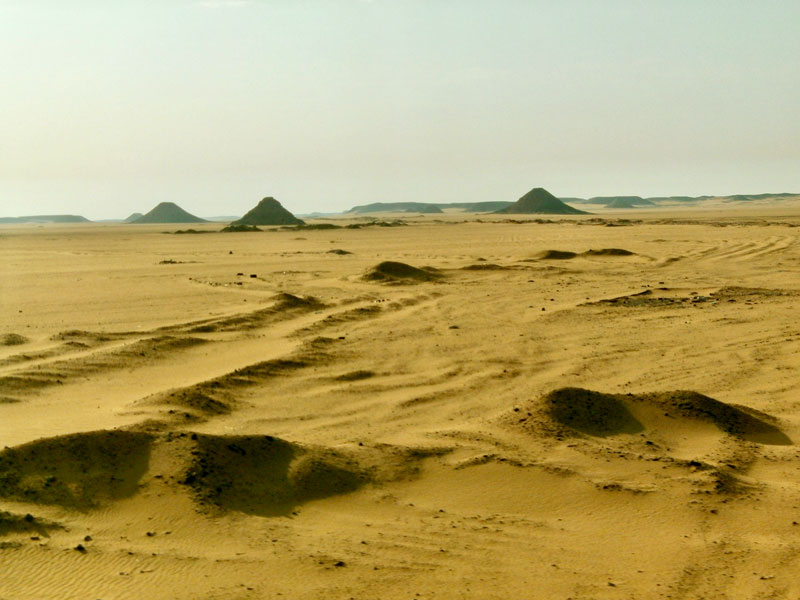
This morning, we were all herded aboard a bus for the long drive south to Abu Simbel.
But, we were not alone.
Not only was our bus sandwiched between two military vehicles for the entire trip back and forth, but an Egyptian soldier, complete with an automatic rifle, joined us on board the bus itself. (These precautions were in place because “dessert pirates”, my choice of words, had been known to “interrupt” tourist groups along the somewhat isolated route. We arrived and returned without incident.)
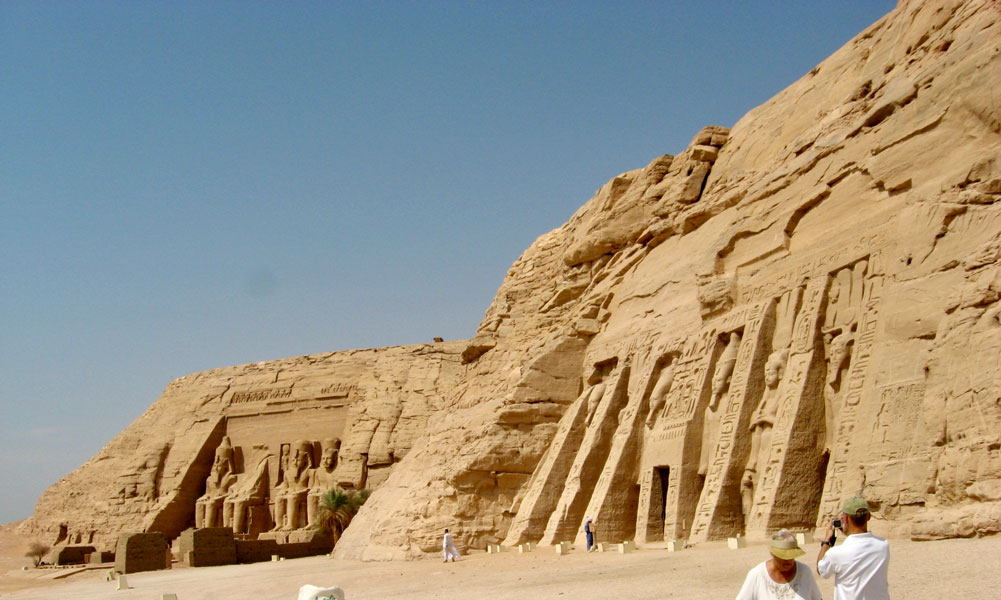
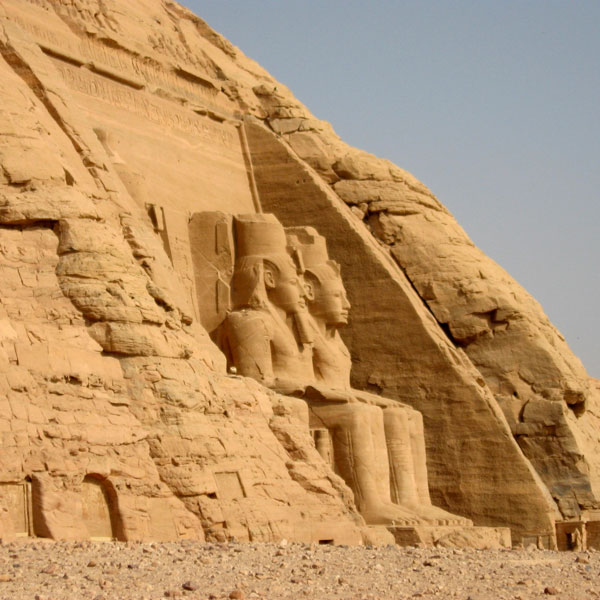
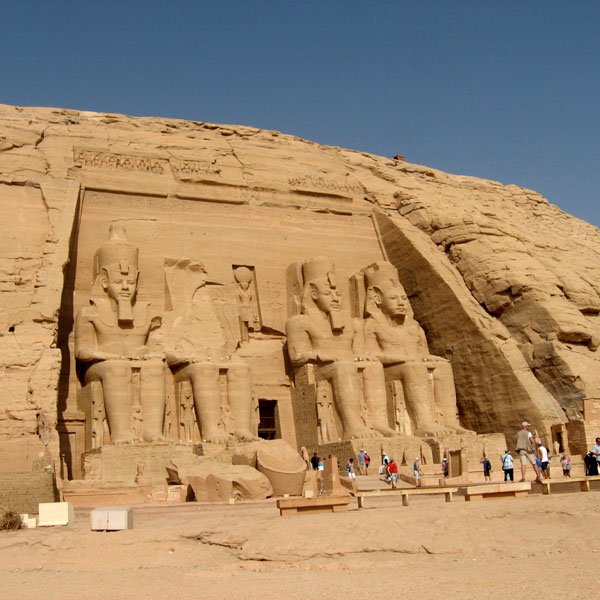
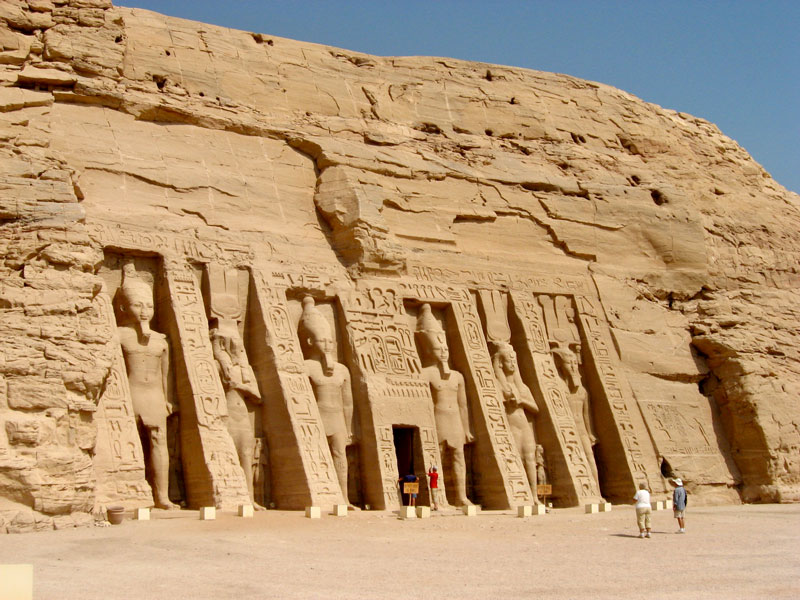
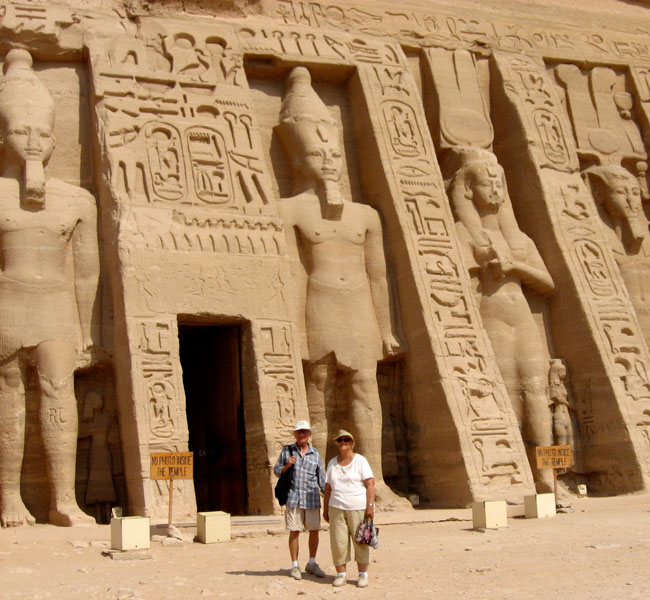
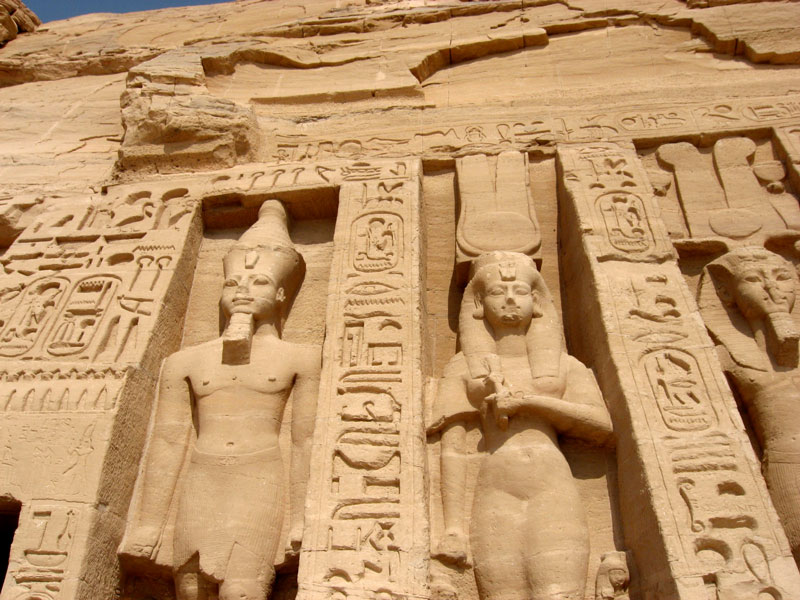
Abu Simbel is comprised of two massive rock-cut temples near the current Egyptian-Sudanese border. The larger temple honors Pharaoh Ramses II and the smaller one, his wife Nefertari. With its colossal array of carved pharaonic figures facing towards ancient Nubia, the two temples, beyond their religious purpose, were powerful symbols of Egypt and the pharaoh’s might.
But as Egypt’s status diminished, the site was abandoned and fell victim to the all-consuming desert sand. They were rediscovered in the early 1800s. Excavated (and looted) by Europeans, the site was resurrected from the encroaching desert, only to be threatened once again in the 20th century. This time, the menace was man-made: the rising waters behind the Aswan High Dam.
Fortunately, UNESCO sent out a call for help. And the world responded, rescuing several of the threatened ancient monuments from the advancing waters. But none were as dramatic or impactful as Abu Simbel. Cut out from the natural rock foundation into which they had been carved, the temples were cut into large blocks, numbered, lifted above the future lake bed and then reassembled in a man-made “mountain” built to replicate both its original placement and its solar alignment. Today, the two temples sit high on the western bank of Lake Nasser, overlooking the resevoir that nearly doomed them to a watery grave,
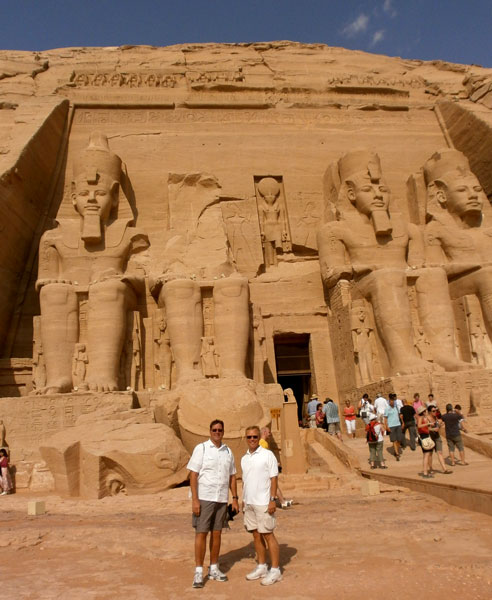
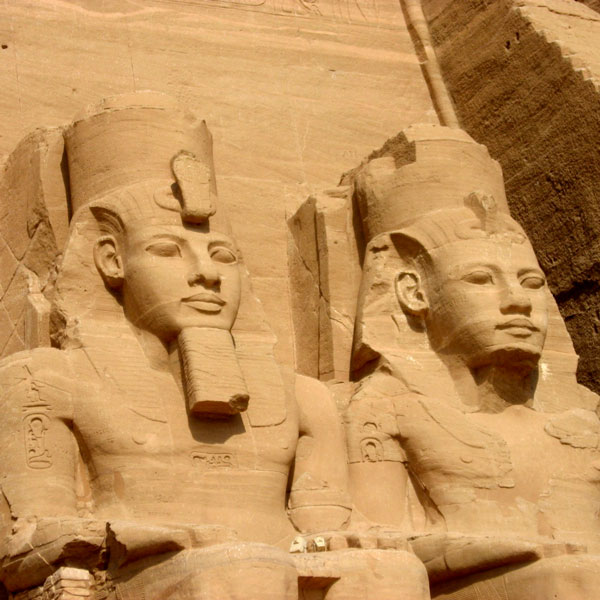
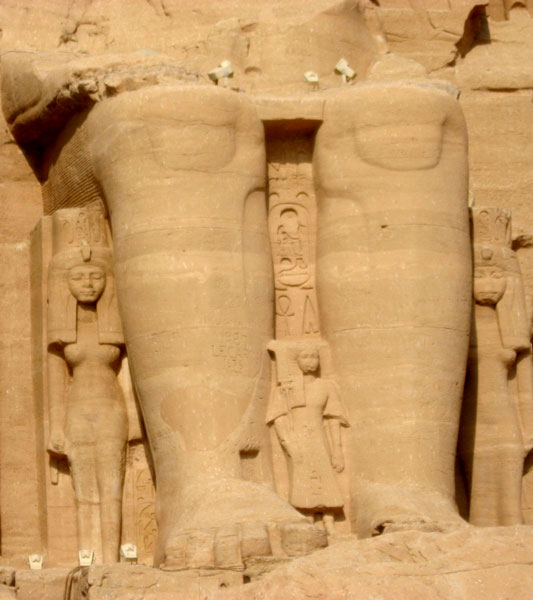
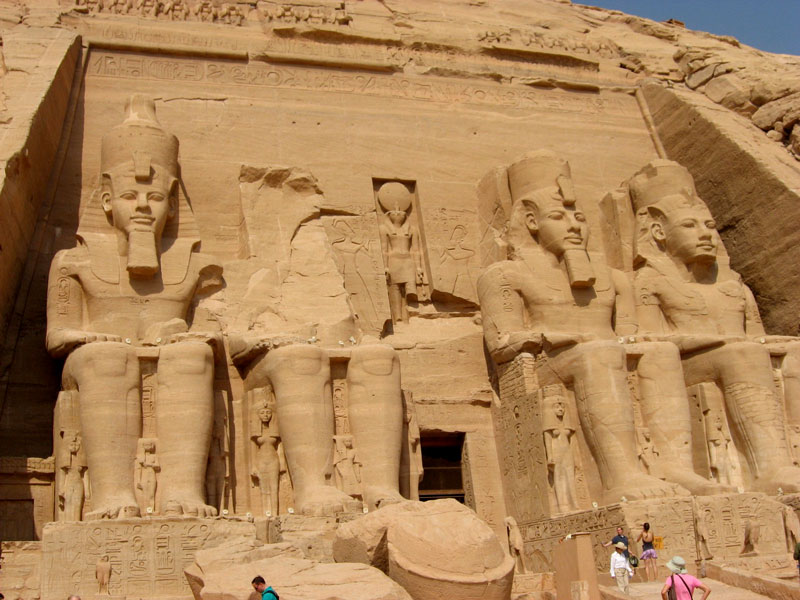
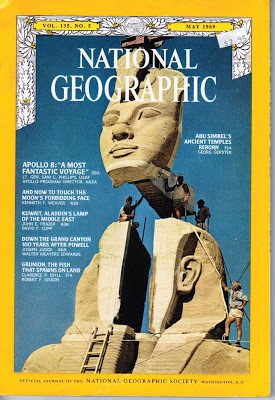
Coming here was a wish fulfillment that I didn’t realize I had. As an avid reader of National Geographic magazine in the 60s, I still vividly recall one particular issue that featured the rescue of the Abu Simbel Temple. The article’s exceptional photography, a hallmark of NatGeo, brought the story to life for me. And for many years thereafter, I retained this issue as a keepsake. Alas, it eventually vanished with the rest of my youth.
 Egypt
Egypt 